


























In a crowded US betting market, the difference between a good bet and a great bet often comes down to the price. A 2026 odds comparison list is not just a table of numbers; it is a practical tool for checking who offers the most favorable terms before money leaves your account. Bettors who compare first tend to make clearer decisions, whether they are backing a favorite, taking a spread, or exploring a live market.
Why Comparing Odds Beats Chasing Bonuses
New bettors often start with the welcome offer because it feels like instant value. That instinct is understandable, but a bonus cannot rescue a weak price. Comparing odds across licensed operators shows where the same outcome pays more, and that extra return applies to the wager itself rather than to a temporary promotion. Over time, small differences in pricing can shape results more than a one-off credit. A useful comparison also reveals which operator has the deeper market, clearer limits, and smoother cash-out terms. Loyalty is optional in a competitive market. If a current operator no longer stacks up, reviewing the wider list is a sensible habit, not a betrayal.
How Sportsbooks Set Their Prices
A sportsbook is a business, and its prices are designed to balance risk while protecting a margin. Recent form, injuries, schedule spots, weather, roster news, and league position all feed into the opening number. Analysts and automated models then shape the line before it reaches the public. The less visible part is the margin. A percentage is built into the odds, so the payout is slightly lower than the true probability would suggest. That margin is how the operator aims to profit across the full market rather than relying on one result. Some books also tweak prices to attract action toward certain outcomes or to encourage more complex bets. Understanding this behind-the-scenes work makes comparison less mysterious. You are not looking for a magic number; you are looking for a fairer slice of the available value.
Reading US Odds Without Overcomplicating It
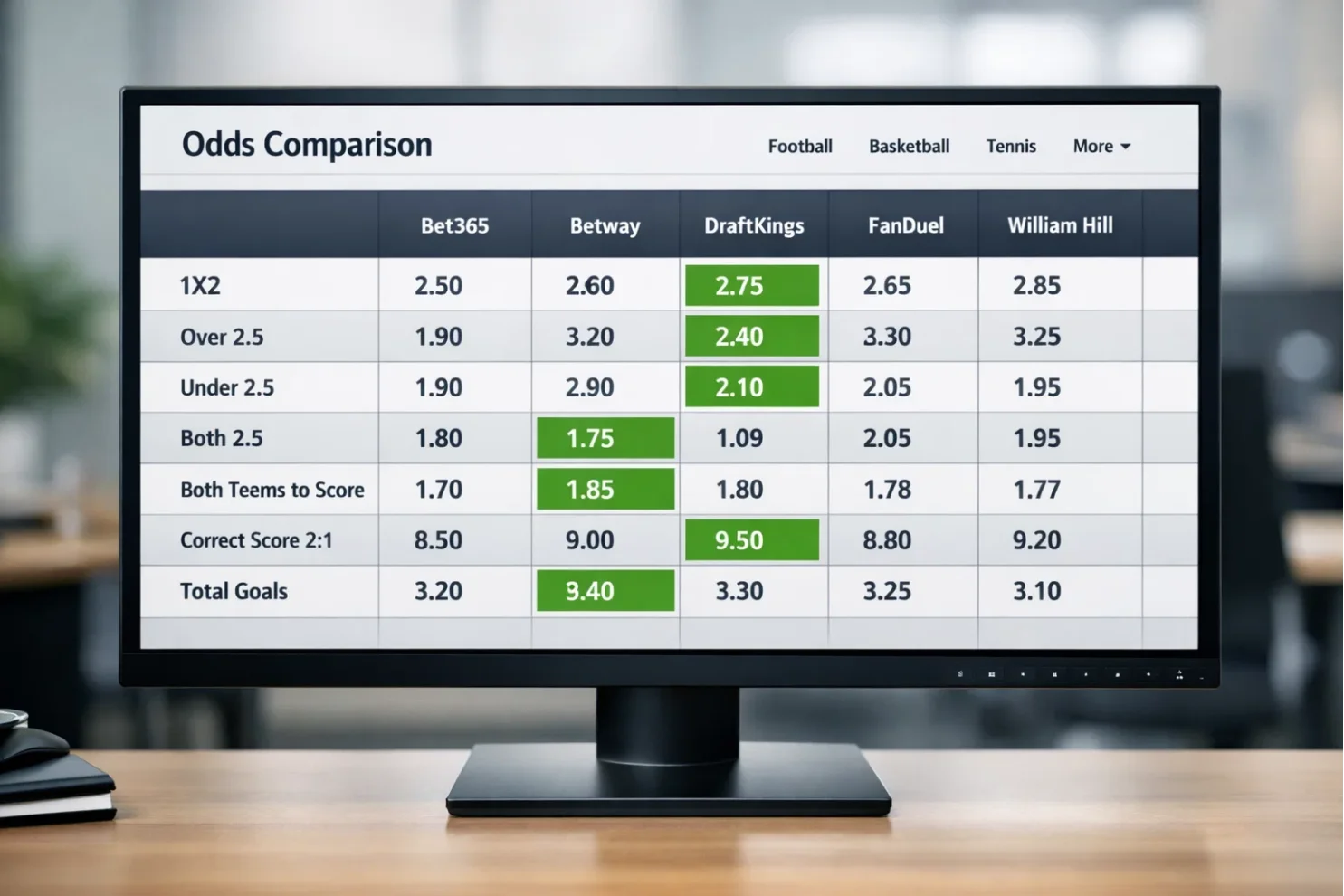
The US betting odds list can look busy, but the main formats follow a simple logic. Moneyline prices show the straight winner. Point spreads add a handicap to level the matchup. Totals ask whether combined scoring will land over or under a posted number. American odds use a plus or minus sign, and the sign matters more than the raw figure. A favorite requires a larger outlay for a smaller return, while an underdog carries a bigger potential payout for a lower implied chance. Conversion tools can help, but the useful skill is comparison. Line up the same market across several licensed operators and ask which one gives the better return for the risk. Pay attention to the full price, not just the headline number. A slightly better price on a main market is often worth more than a flashy offer on a side market.
Live Odds and the Value of Timing
Live betting moves quickly, and comparison becomes both harder and more important. Prices shift as the game unfolds, and operators may update at different speeds. A comparison list that includes live markets helps a bettor see whether a price has lagged behind the action or whether the market has already corrected. Timing is not about guessing the next twist. It is about knowing when a number is out of step with the rest of the market. Before a game, checking the comparison list close to kickoff can also show how lines have moved. Early prices may reflect projections, while later prices absorb confirmed lineups and late news. A disciplined bettor watches both, then decides whether the current price still makes sense. Chasing movement after the value has gone is rarely a sound plan.
What a Strong 2026 Comparison List Should Show
A useful comparison tool should do more than list odds. It should make the same market easy to find across multiple licensed operators, show the current price clearly, and separate pregame from live data. It should include the major US sports and the common bet types without burying them under promotional clutter. Expected value is another helpful filter. Rather than asking only which payout looks biggest, the bettor can ask whether the price is fair relative to the implied probability. A strong list also flags restrictions, limits, and settlement rules, because a good number means little if the terms are unclear. Finally, a trustworthy comparison source should be transparent about when prices were updated. Odds are perishable, and stale information can turn a smart search into a wasted click.
Final Takeaway
Odds comparison is a discipline, not a one-time chore. Start with the market you understand, check the same outcome at several licensed operators, and look past bonuses to the actual price and terms. Review how margins and line movement affect value, and treat live odds with extra care. In 2026, the best US betting odds list is the one that helps you ask better questions before you stake. Compare first, bet second, and keep loyalty conditional on value.

0 تعليقات
لا توجد تعليقات بعد. كن أول من يشارك تجربته.